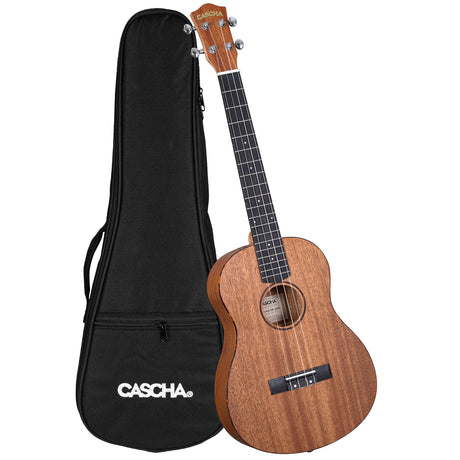
A baritone ukulele sounds lower and warmer than the smaller models and is tuned in DGBE, the same note names as a guitar's top four strings. That is exactly what makes it the obvious instrument for guitarists who want to start playing without rethinking their fingering. The bass ukulele goes a step deeper still, replacing the electric bass on the road and on stage with a short scale and thick polymer strings.
This article explains the tunings, places both large formats against soprano, concert and tenor, and tells you when reaching for a big ukulele genuinely makes sense.

DGBE, like a guitar's top four strings
Ideal for: Guitarists and anyone after a lower, warmer ukulele sound
See all Ukulelen - Bariton →
EADG, short-scale electric-bass substitute
Ideal for: Band, travel and stage, when you need a real bass tone in a compact format
See all Ukulelen - Bass →01The baritone ukulele: DGBE like a high guitar
The baritone is the largest of the classically tuned ukuleles. Instead of the usual GCEA tuning of the smaller models, it sits in DGBE, the same note names as a guitar's top four strings. Anyone who plays guitar will reach for familiar chord shapes from the very first moment, with nothing new to relearn.
The sound is lower, fuller and warmer than on a soprano, concert or tenor, because the scale length and body are larger and the D and G strings are wound. That makes the baritone the calm, rounded voice in a ukulele ensemble and the natural bridge for guitarists.

02The bass ukulele: EADG as a compact bass substitute
The bass ukulele is tuned in EADG, exactly like an electric bass, only in a far more compact format. This is made possible by thick strings in a special polymer or rubber material that deliver a surprisingly full, deep tone despite the short scale. Contrary to a common assumption, these instruments are fretted, so they have fixed frets just like a guitar.
For band rehearsals, small stages and above all travelling, this is a serious bass in pocket format. With the built-in pickup, the signal goes straight into the bass amp or the mixing desk.

03When the large ukuleles make sense
Three situations clearly favour the large format. First, the switch from guitar: the baritone takes over the DGBE shapes directly, so getting started is almost seamless. Second, the search for a lower, warmer voice when the bright sound of the smaller ukuleles feels too sharp. Third, the need for a real bass foundation in a band or on the road, without lugging around a full-size electric bass.
If instead you want the classic, bell-like Hawaiian sound or a first instrument for small hands, the smaller sizes are the better fit. Which size suits whom is covered in detail in our size guide.
| Baritone ukulele | Bass ukulele | |
|---|---|---|
| Tuning | DGBE (like a high guitar) | EADG (like an electric bass) |
| Strings | nylon/carbon, D and G wound | thick polymer/rubber strings |
| Sound | low, warm, full | real bass, one octave lower |
| Ideal for | guitarists, warmer tone | band, stage, travel bass |
| Frets | fretted | fretted |
The large ukuleles are not a niche but a clear answer to concrete needs: the baritone in DGBE for a seamless switch from the guitar and a warmer tone, the bass ukulele in EADG as a compact, stage-ready bass. If you recognise one of these three situations, the large format is the right call.
Frequently asked questions
How is a baritone ukulele tuned?
Can a guitarist play a baritone ukulele right away?
Is a bass ukulele a full bass?
Are bass ukuleles fretless?
How does the baritone differ from the smaller ukuleles?
Discover the large ukuleles
Compare baritone and bass models and find the instrument that matches your sound.
See all ukulelesDiscover the baritone ukulelePassende Produkte