

The kalimba is one of the loveliest instruments to start on: compact, instantly playable and tuned at the factory. If you want to buy a kalimba, though, questions come up fast: 8, 17 or 21 tines, wood or acrylic, C major or minor.
This guide clears that up. We explain the common sizes, the difference the resonance body makes, how tuning works and why number-based notation makes getting started so easy. A clear recommendation rounds it off.
01What is a kalimba?
The kalimba is a thumb piano, descended from the African mbira. Several metal tines of different lengths sit on a resonance body and are plucked with the thumbnails. The longer the tine, the lower the note.
What makes it special: no prior knowledge is needed. The notes come pre-tuned, each one sits cleanly in its place, and even the first pluck sounds round. That is exactly what makes the kalimba an ideal starter instrument for children and adults alike.
02Which size: 8, 17 or 21 tines?
The number of tines determines the range. For beginners, the 17-note kalimba in C major is the standard: it covers around two octaves, which is enough for nearly every beginner piece, and most songbooks are written exactly for it.
Smaller models with 8 or 9 tines are more like sound toys or travel companions with a reduced range. 21-note kalimbas give more headroom at the top but are not needed to start. If you are serious, begin with 17 notes.
| Tines | Best for | Range |
|---|---|---|
| 8 / 9 | Toy, travel, children | under one octave |
| 17 (C major) | Beginner standard | around two octaves |
| 21 | Advanced | extended range |
03Resonance body: wood, acrylic or hollow box
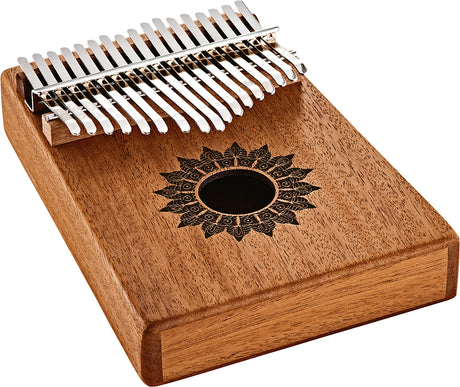
The sound depends heavily on the body. A kalimba on a solid wooden resonance box sounds warm, full and with long sustain, the classic round kalimba tone. Models with a sound hole amplify this further.
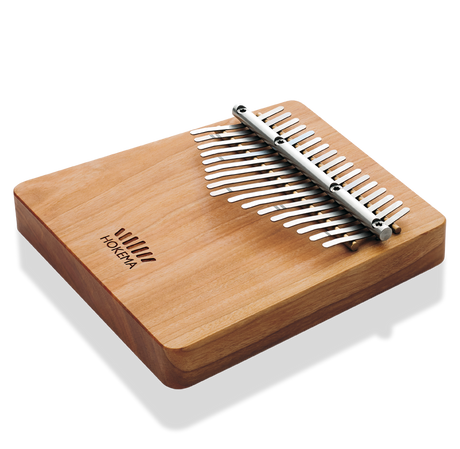
Kalimbas on a flat wooden board without a hollow body sound more direct and quieter, perfect for focused practice. Transparent acrylic bodies sit in between sonically and score on looks. For getting started we recommend a wooden body with a sound hole, because it delivers the fullest and most motivating sound.


04Tuning: C major, factory-tuned and fine-tuning
Beginner kalimbas come in C major and are fully tuned at the factory, so you can start right away. Over time, or after a drop, a tine can drift slightly out of tune. A tuning hammer then helps: gently tapping the tine moves it in or out and changes the pitch.
A tuner app on your phone shows whether the note is right. With a little patience, fine-tuning is quickly learned and is part of normal care.

05Learning to play: numbers instead of staves
The biggest advantage for beginners: kalimba notation is usually written as numbers, not classical staff notation. Each tine has a number, and the songbook simply tells you which number comes when. Even if you have never read music, you play your first melodies within minutes.
Matching tutor books and songbooks for 17-note kalimbas come ready-made. They are the fastest bridge from unboxing to your first song.

06Care and related instruments
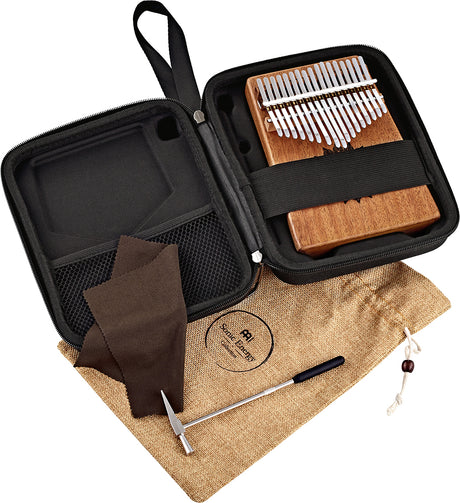
A kalimba needs little: occasionally wipe the tines with a dry cloth, remove fingerprints and store it dry. A little care oil on the metal tines prevents corrosion. A padded bag protects it on the go.
Anyone after the floating, meditative sound will sooner or later come across the sansula, a related thumb piano with a skin membrane and a hovering tone. A dedicated article will follow.
Our recommendation for getting started: a 17-note kalimba in C major with a wooden body and sound hole. It covers nearly every beginner piece, plays in tune straight out of the box and has songbooks available everywhere. If you want to invest more, go for the premium build quality from Hokema.
Frequently asked questions
How many notes should a beginner kalimba have?
Do I have to tune a kalimba myself?
Do I need to read music to play the kalimba?
What is the difference between a kalimba and a sansula?
Ready for your first note?
Browse our kalimbas and find the right model for your start.
View all kalimbasMatching songbooksPassende Produkte

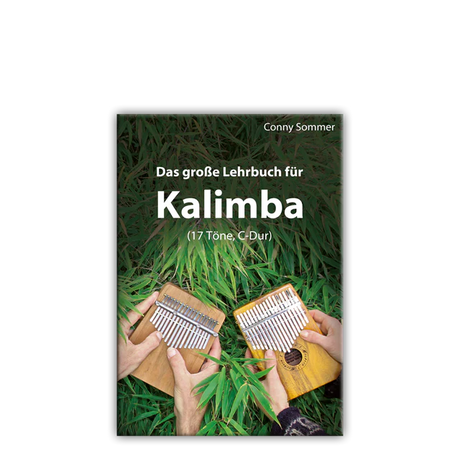
The Great Textbook for Kalimba (17 Tones, C Major) - Conny Sommer