

The sound of a singing bowl is not made by the bowl alone, but by how it meets the right mallet. Material, head size and technique decide whether the tone turns out warm and soft, bright and clear, or long and singing.
Striking the bowl calls for a different striker than rubbing the rim. This guide matches the common mallets and friction sticks to their tonal characters, so you can find the right tool for your bowl.

The played tone
Ideal for: Felt and rubber mallets: a soft, warm or clear single tone to start the bowl
See all Klangschalen →The singing tone
Ideal for: Wood and leather friction sticks: a sustained, overtone-rich tone by circling the rim
See all Klangschalen →01Striking or Rubbing: Two Techniques, Two Tools
A singing bowl can be brought to sound in two ways. When striking, you tap the bowl with a mallet and let the tone ring out, giving a clear single note. When rubbing, you run a friction stick evenly and in a circle along the outer rim until a sustained, singing tone builds up.
Each technique needs a different tool. A mallet is made for the strike, a friction stick for steady friction on the rim. Many players keep both at hand to switch between a short impulse and a long wash of sound.
02Mallet Material: Felt, Rubber and Wood Compared
The material of the mallet head shapes the character of the strike. A soft felt head produces a warm, round and rather dark tone, ideal for calm, meditative use. A hard felt or wooden head gives a brighter, clearer and more overtone-rich sound with a more pronounced attack.
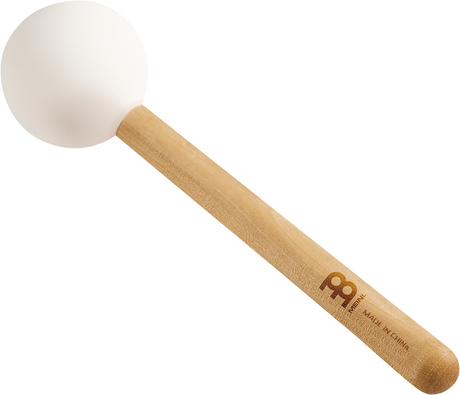
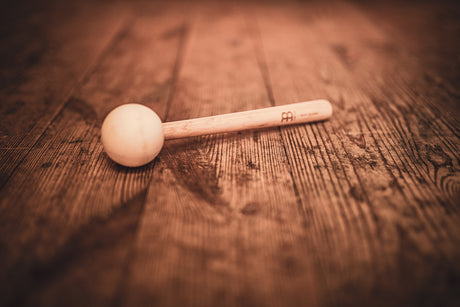
Rubber heads hold a special place: struck, they sound soft and clear, and run along the rim they can also be used for rubbing. A good starting point is the pairing of a soft and a harder mallet, so you can play the same bowl in several tonal colours.


03Head Size: Large for Deep Bowls, Small for High Ones
The mallet head size should match the bowl. As a rule of thumb: the larger and heavier the bowl and the deeper its fundamental tone, the larger the mallet head. A large, heavy head fully excites a big bowl and draws out the low frequencies.
Small and high bowls in turn need a small, light head, otherwise the tone is muted rather than brought to life. If you play several bowls of different sizes, it is best to keep two or three mallets in graded head sizes.
| Tool | Material | Head size | Suits | Tonal character |
|---|---|---|---|---|
| Soft felt mallet | Natural felt | large | large, deep bowls | warm, round, dark |
| Hard felt mallet | Natural felt | small to medium | small to medium bowls | clear, bright, overtone-rich |
| Rubber mallet | Rubber head | small to medium | striking and rubbing | soft-clear, versatile |
| Wood friction stick | Wood | slim | medium to large bowls | sustained, singing |
| Leather-wrapped stick | Wood with leather | slim | delicate bowls | gentle onset, singing |
04Friction Stick and Wand: The Sustained, Singing Tone
A friction stick, often also called a wand, produces the long, singing tone singing bowls are known for. You run the stick with steady pressure in a circle along the outer rim until the bowl starts to vibrate and the tone builds.
Wooden friction sticks have a smooth surface that creates the characteristic friction sound and suit medium to large bowls. Leather-wrapped versions start more gently and are pleasant for delicate or smaller bowls. Crystal singing bowls have their own coated rods, matched to the glass material.


05Care: Keeping Mallets and Bowl in Good Shape
Mallets and friction sticks are robust but benefit from some care. Store felt heads dry and dust-free so the felt does not clump, and keep wooden handles and friction sticks away from lasting moisture. A small pouch or cloth protects the heads between uses.
The bowl itself appreciates an occasional dry wipe; for metal bowls there are matched care sets that reduce tarnish marks. That keeps both tool and bowl ready to play for years.

The right singing bowl mallet depends on your bowl and the sound you want: soft felt for warm tones, hard felt or wood for clear tones, a friction stick for the sustained singing tone, and the head size matched to bowl size and pitch. With two mallets and a friction stick you can draw several tonal colours from every bowl.
Frequently asked questions
Which mallet is best for beginners?
What is the difference between a mallet and a friction stick?
How large should the mallet head be?
Which friction stick suits crystal singing bowls?
Does felt or rubber sound softer?
Find the right striker for your bowl
From the soft felt mallet to the wooden friction stick: browse our singing bowls and the matching accessories.
View singing bowlsLarge-head felt malletPassende Produkte
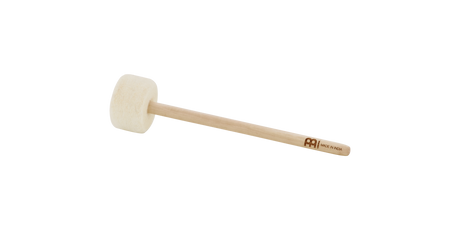
MEINL Sonic Energy Singing Bowl Mallet Big Head - 21cm (SB-M-LT-S)
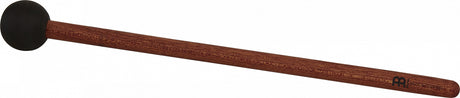
MEINL Sonic Energy Professional Singing Bowl Mallet - Soft Rubber Head, Small
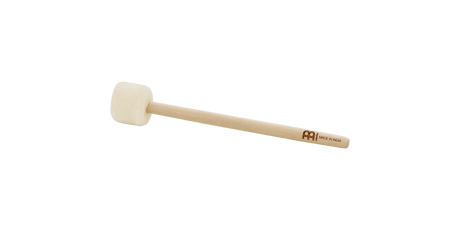
MEINL Sonic Energy Singing Bowl Mallet Small Head - 8.27"/21cm (SB-M-ST-S)
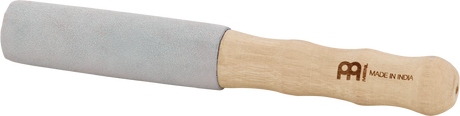
MEINL Sonic Energy Singing Bowl Reamer - 20.1cm (SB-RM-LE)
MEINL Sonic Energy Crystal Singing Bowl Mallet (CSBM)

