

Clarinet reeds come in many brands, strengths and cuts, and it is the very first purchase that causes the most confusion. The most common mistake is not the wrong strength but the wrong system: a reed for a Boehm clarinet does not fit a German-system clarinet, and the other way round.
This guide shows how to find the right reed for your instrument, which strength makes sense for beginners and how to get more out of every box with breaking in and rotation.
01German system or Boehm: the first decision
Clarinets come in two main designs. The Boehm system is the international standard, while the German system (also called the Oehler system) is mainly common in German-speaking regions. The two systems differ not only in fingering but also in bore and mouthpiece, and that is exactly what the reed depends on.
Reeds for the German system are wider and, at a comparable pitch, usually cut a little stronger, because the German mouthpiece has a longer facing and a narrower bore. Boehm reeds are narrower and matched to the more open French mouthpiece. The two designs are not interchangeable: a German reed does not seat properly on a Boehm mouthpiece and will not sound, and a Boehm reed is too narrow for the German mouthpiece.
In short: first check which clarinet and mouthpiece you play, then buy the matching reed. The label German or Boehm appears directly in the product name of every reed.
02Which reed strength for beginners
The reed strength describes how hard the cane is cut, with common values from about 1.5 to 5. A soft reed responds more easily and needs less pressure but goes thin sooner. A hard reed sounds fuller and more stable but demands a trained embouchure.
For the start, strengths 2 to 2.5 are the right choice. The tone comes out reliably without overtaxing the still unfamiliar lip and breathing muscles. As confidence grows, many players move up to 2.5 to 3 after a few months, while advanced players often use 3 and above.
Keep in mind that strength is not a quality mark. A harder reed does not sound better automatically, it simply suits a more developed embouchure. Move up gradually, not in jumps, and make sure the strength matches your mouthpiece. As a more refined option for later, take a look at Vandoren V12 Klarinettenblatt verschiedene Stärken 10er Pack.


03Brands and cuts: Vandoren, D'Addario and more
A few makers have become the standard. Vandoren Traditional is the classic with a balanced, flexible tone and a good choice for the start. Vandoren V12 is thicker at the heart and the tip, sounds rounder and often lasts longer, but feels a touch firmer, a V12 in 2.5 roughly equals a Traditional in 2. From D'Addario the Rico ranges are widespread, Rico and Rico Royal are affordable and great for practising and trying things out.
For the German system there are dedicated cuts, such as Vandoren White Master Traditional Klarinettenblatt deutsch verschiedene Stärken 10er Pack or reeds by Steuer. Here too, check for the German label in the name, otherwise you reach for a Boehm cut by mistake.
A practical tip for the start: buy a box in the right strength rather than expensive single reeds, because reeds naturally vary in quality, and from a box of ten you will pick out the two or three especially good ones.


04Breaking in, care and rotation
A new reed does not give its best straight away. Play a fresh reed for only a few minutes in the first days, moisten it with saliva or water instead of putting it on dry, and let it dry flat afterwards. That way the cane swells evenly and does not warp.
Do not use a single reed to the end, but rotate between several. Three to four broken-in reeds in rotation last considerably longer together than one in a row, and you always have a spare ready if one cracks. A reed case keeps the reeds flat and protects the delicate tip.
When is a reed finished? When it responds scratchily, the tip is frayed or wavy or the tone stays dull, it is time for a new one. With regular practice a reed is usually worn out after a few weeks.
The most important reed decision comes before the strength: first settle whether your clarinet is a German or Boehm system, then pick the matching reed in strength 2 to 2.5 for the start. A box rather than single reeds, a few reeds in rotation and a little care, that is all it takes at the beginning.
Frequently asked questions
Does a Boehm reed fit a German clarinet?
Which reed strength for a beginner clarinet?
What is the difference between Vandoren Traditional and V12?
How long does a clarinet reed last?
How do I tell a German reed from a Boehm reed?
The right reed for your clarinet
Browse the selection of clarinet reeds for German and Boehm systems, sorted by brand and strength.
View clarinet reedsVandoren TraditionalPassende Produkte
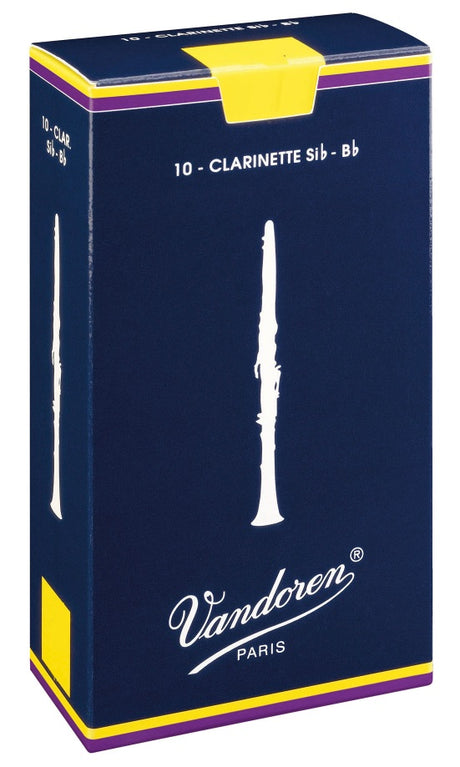
Vandoren Classic Clarinet Reeds Boehm Various Strengths Pack of 10

Rico clarinet reeds Böhm 10-pack various strengths

Vandoren White Master Traditional Clarinet Reeds German Various Strengths Pack of 10
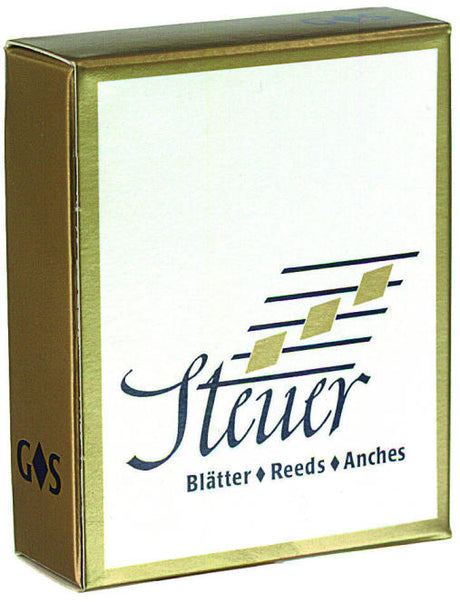
Steuer B clarinet reed German various strengths 10-pack