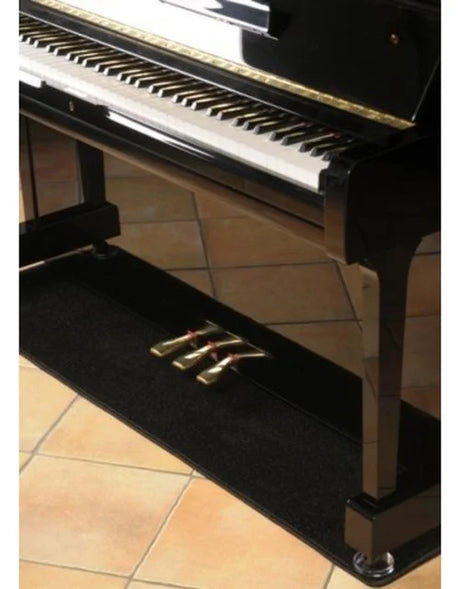
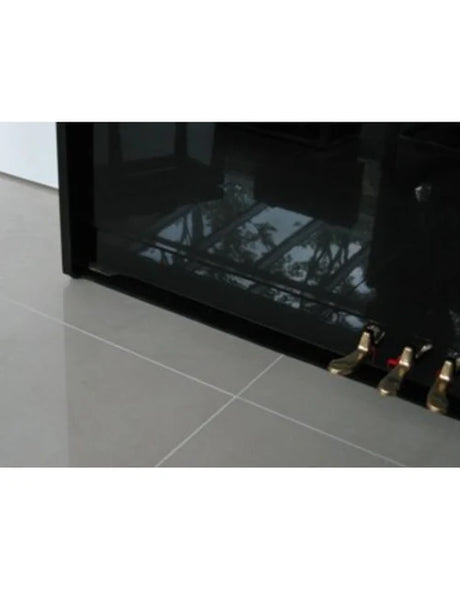
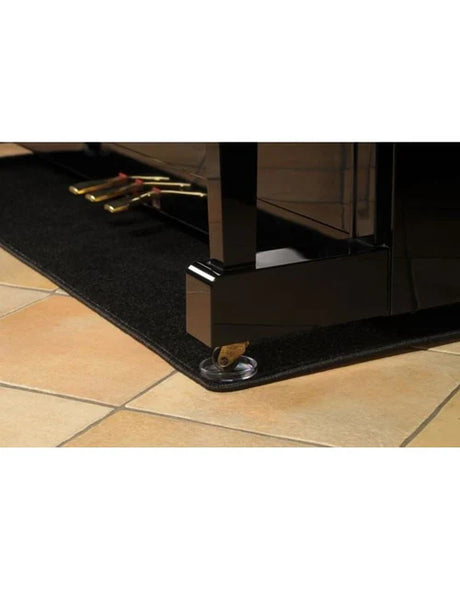
A piano rug is more than a decorative piece. Beneath an upright or grand piano it does three jobs at once: it dampens the impact noise that travels through the floor into the flat below, it protects delicate parquet from caster pressure and marks, and it visually ties the piano corner together.
Anyone playing on a hard floor or living in a rental benefits most. This guide explains which material makes sense, how large the rug should be for an upright or a grand, and what matters for slip resistance and care.
01What a piano rug does
An instrument transmits part of its vibration straight into the floor. On parquet or laminate this structure-borne sound passes through unchecked — the neighbours below you hear more than you would like. A piano rug separates the instrument from the floor and absorbs some of that energy before it reaches the ceiling.
It also shapes the room acoustics on a small scale: the soft surface absorbs early reflections from the floor, so the tone feels a little rounder and less harsh up close. Thirdly, it protects the floor. Both uprights and grands stand on casters or feet that press down with high weight in single spots. Over years this leaves dents in soft parquet. The rug spreads the load and prevents scratches when the instrument is moved.
02Material: felt and wool versus synthetic
There are two routes when it comes to material. Natural materials such as felt and wool are dense, heavy and absorb vibration well. Felt protects the floor especially well against pressure marks and scratches and stays hard-wearing without the surface thinning quickly. Wool feels warm and refined and suits a living room with a piano.
Synthetic rugs are often cheaper and easier to clean, but usually dampen a little less and can take on odours over the years as dust settles into the fibre. A proven combination is a textile surface with an integrated impact-noise layer of felt or foam — it pairs floor protection with damping. The Pianocarpet Klavier Teppich - Isolierteppich is built exactly this way, designed as an insulating rug to place under the instrument.

03Size: upright footprint versus grand triangle
The right size follows the shape of the instrument. An upright stands with its back to the wall and has a rectangular footprint. The rug should take in the full standing area and reach out at the front so the player, with stool and pedal foot, stays on the surface — as a rule of thumb roughly the width of the instrument plus a seating zone.
A grand piano instead has a triangular footprint with three widely spaced legs. Here the rug needs more depth so all three casters sit safely on it and the pedal lyre leg does not overhang the edge. Planning generously pays off: a rug that ends under the instrument fully protects neither the floor nor the playing area.
| Instrument | Shape | What to watch |
|---|---|---|
| Upright | rectangular | cover footprint plus stool and pedal area |
| Grand | triangle | all three legs plus pedal lyre on the rug, plan more depth |
04Slip resistance and care
A piano rug has to stay put. When the instrument is moved or the pedals are played, the rug must not creep. A non-slip backing or a matching anti-slip underlay keeps it in place and protects the floor from abrasion at the same time.
Care is straightforward: vacuum regularly, choose gentle cleaning for natural fibres and occasionally brush up caster marks. Lifting the instrument carefully rather than pushing it spares both rug and floor. For positioning the instrument itself, see the guide on placing an upright or grand piano.
A piano rug is a small purchase with a big effect: quieter neighbours, a protected floor and a visually clean piano corner. What counts is dense material, a size matched to the shape and a reliable non-slip hold.
Frequently asked questions
Do I even need a piano rug on carpet?
Does a piano rug really protect my parquet from dents?
Which material dampens sound best?
How large should the rug be for a grand piano?
The right base for your instrument
From the insulating rug to a new piano — find what belongs under and on the floor.
Browse new pianosDiscover the Yamaha B10Passende Produkte