Which harmonica should a beginner choose? If a course does not specify another key, a 10-hole Richter-tuned diatonic harmonica in C is a clear starting point. HOHNER names C as a common beginner key because much learning material uses it. For blues, the same C harmonica can also be played in second position in G.
Chromatic and tremolo models serve different musical needs. Choose the type first, then the tuning.
| Type | Manufacturer description | Question to ask |
|---|---|---|
| Diatonic | Major scales and chords in one tuning | Does the learning material use a set key? |
| Chromatic | Semitones accessed with a slide | Do you need melodies across keys? |
| Tremolo | Two slightly detuned reeds per note | Are you looking for this pulsing effect? |
01Diatonic, chromatic or tremolo?
With a diatonic harmonica, the available notes relate to its tuning. HOHNER describes it as offering simple major scales and chords; blues, folk, country, pop and rock are among its typical uses. A chromatic harmonica provides the semitones of the chromatic scale with a slide, and the maker lists jazz and classical music among its uses. On a tremolo harmonica, two slightly detuned reeds for each note create the pulsing effect. HOHNER associates this type especially with traditional and German folk music. There is no universal ranking. Ask what music you want to play and whether a fixed tuning suits your learning material, or whether you need the wider chromatic range.
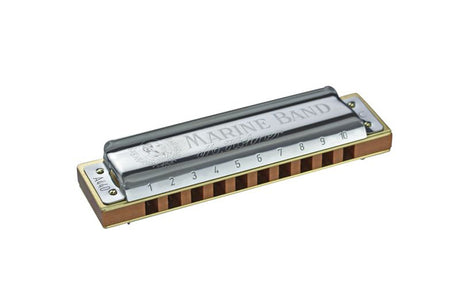
02Special 20 and Marine Band 1896 for diatonic playing
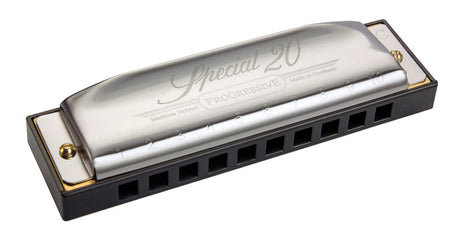
Without a course or method specifying a key, a 10-hole Richter-tuned diatonic harmonica in C is a practical beginner choice. HOHNER recommends C because much beginner material is written for it. In second position, a C harmonica can also be used for blues in G. The HOHNER Special 20 is one example of a diatonic model available in several keys; select the C version explicitly on the product page if needed.
03Chromonica 270/48 when you need the slide
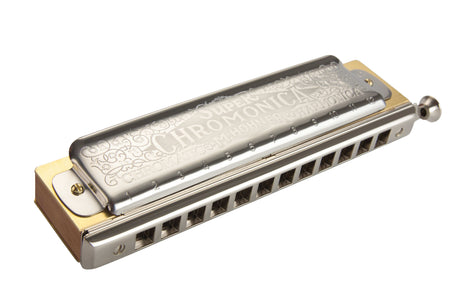
A chromatic harmonica expands the available notes with its slide. For the HOHNER Super Chromonica 270/48, the maker lists 12 holes, 48 brass reeds and a three-octave range from C4 to D7. These are specifications of this particular model. It can be a fit when the repertoire or learning material calls for chromatic playing. That range also means a different way of operating the instrument than a diatonic blues harp. Check which type your chosen method expects. If you have a particular style or sequence of exercises in mind, first confirm which harmonica family the material was written for.
04Check tuning and model before you buy
First check whether your learning material requires a particular key. If it does not, start with C. A chromatic harmonica adds semitones with a slide; a tremolo model creates a pulsing sound with two slightly detuned reeds per note.
Choose the type around your music and learning material, then check the exact key of the variant. The Special 20 comes in several keys, so its product link does not guarantee the C version.
Frequently asked questions
Which harmonica is good for a beginner?
Can I play blues in G on a C harmonica?
Is the HOHNER Special 20 in C?
What is the difference between diatonic and chromatic?
Browse harmonicas by type
Compare diatonic and chromatic models, and check which tuning you need.
Browse all harmonicasExplore the Special 20Explore the Chromonica 270Passende Produkte