

The music school recommends a flute, or the child simply wants to get started — and the first question comes up fast: which model is right for a beginner? With a brand like Yamaha, the choice is simpler than it looks, because the 200-series student flutes have been the standard in music education for decades.
The most important decision, though, isn't the model name — it's the headjoint: straight or curved, plus closed or open-hole keys. This guide explains what matters in a few minutes and names concrete models to get started.
01Straight or curved headjoint — which fits my child?
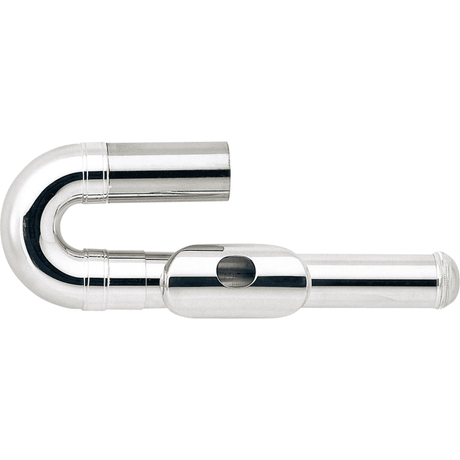
The headjoint is the part you blow into — and for smaller children, its shape decides whether playing feels comfortable or awkward from day one. A straight headjoint requires the arm stretched out to the side; with short arms, the flute tends to tip downward, or some keys become hard to reach.
A curved headjoint shortens the reach: the keys move closer to the body, the balance point shifts, and even small hands reach every key without strain. Yamaha FHJ-200-U gebogenes Kopfstück für Querflöte – versilbertes Neusilber für kleinere Hände (inkl. Etuiüberzug) is built exactly for that — an additional headjoint in silver-plated nickel silver, matching Yamaha student flutes in the 211/271/281 and 212/272/282 series. Important: it doesn't replace the flute — it's added alongside the straight headjoint and swapped back later once arm length allows it, while the flute itself stays the same.

02Yamaha YFL-212 or YFL-272 — the difference explained
Both models belong to Yamaha's 200 series, share the same CY headjoint concept, the same split-E mechanism for a reliable high E, and an offset G. The difference is purely in the key style.
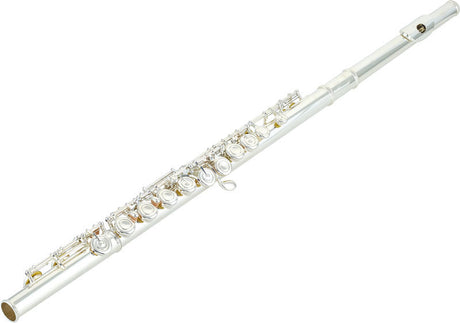
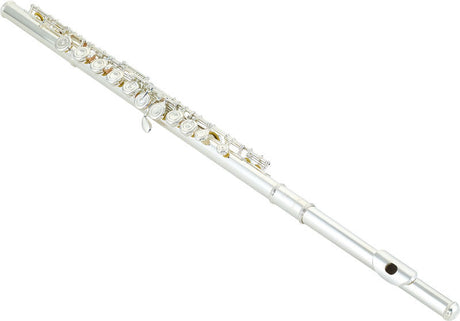
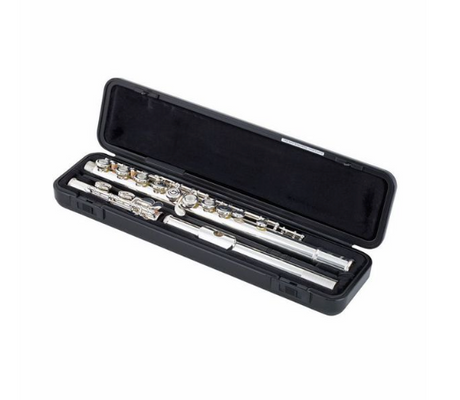
Yamaha YFL-212 Querflöte – versilberte Schülerflöte mit Split-E-Mechanik (Neusilber, Offset-G, C-Fuß) has closed (plateau) keys: each key is fully covered, so small finger-placement inaccuracies underneath don't matter. That makes it the classic recommendation for a very first instrument, since finger technique builds up faster.
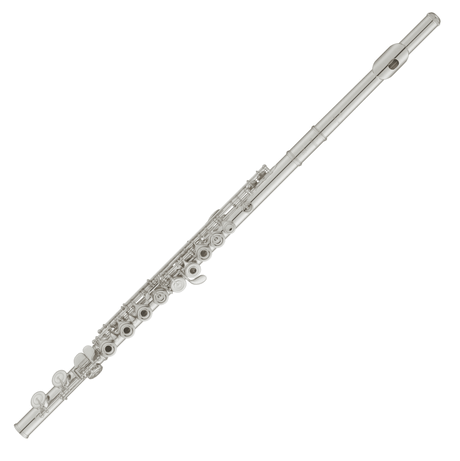
Yamaha YFL-272 Querflöte – versilbertes Neusilber mit Split-E-Mechanik & Ringklappen (Offset-G, C-Fuß) has open-hole ring keys: a hole in the centre of each key that the finger has to cover completely. That trains precise finger position from the start and is often recommended for slightly more advanced players or larger hands — the later step up to more advanced flutes feels more natural, since ring keys are standard there.


| YFL-212 | YFL-272 | |
|---|---|---|
| Key style | closed (plateau) | open (ring keys) |
| Headjoint | CY headjoint, silver-plated nickel silver | CY headjoint, silver-plated nickel silver |
| E mechanism | split-E | split-E |
| Offset G | yes | yes |
| Best for | first-time beginners | more advanced fingers / larger hands |
03What the split-E mechanism does
Both recommended models come with a split-E mechanism as standard — a detail that cheaper no-name flutes often skip. Without it, the high E tends to sound unclear or fails to speak at all, because two keys would need to close at exactly the same moment. The split-E mechanism separates those two keys mechanically, so the high E speaks reliably and clearly — a noticeable difference for beginners, since early success keeps practice motivation up.
04Care basics for getting started
A flute needs a quick wipe-down after every session — otherwise moisture inside the body attacks the pads. Getting started doesn't require workshop skills, just the right basic kit: a pull-through swab for the body, cleaning paper for the pads, powder paper against sticky keys, and a stable stand for breaks.
Yamaha YFL-212 Starter-Set mit Ständer, Wischer & Pflegepapieren bundles exactly that with the YFL-212: flute, stand, swab, cleaning paper and powder paper in one package — practical when everything needs to be sourced at once.

05Browse flutes
To compare independently: the Querflöten category can be sorted by price, headjoint type and included accessories.
The most important decision isn't the model name — it's the headjoint: straight or curved depending on arm length, closed or open keys depending on finger dexterity. For a classic first instrument, the Yamaha YFL-212 with closed keys remains the reliable choice; the YFL-272 with ring keys suits slightly more practised fingers — both with a split-E mechanism and the same dependable Yamaha quality.
Frequently asked questions
From what age does a curved headjoint make sense?
Yamaha YFL-212 or YFL-272 — which for a beginner?
What is a split-E mechanism, and do I need it?
What belongs in a basic care kit?
Does the headjoint need to match the flute?
Find the right beginner flute
Confirm the headjoint, pick the model — ready for school or music lessons.
Browse flutesSee the starter setPassende Produkte


Yamaha YFL-212 Flute Starter Set with Stand, Swab & Cleaning Papers