

Anyone who plays the saxophone soon realises the reed shapes tone and feel more than almost any other accessory. So the most common beginner question is which saxophone reed strength is the right one. The number on the box, from 1.5 to 4 and up, describes how hard or soft the cane vibrates and how much resistance you feel when you blow.
This guide sorts the strengths by playing level, explains how reed and mouthpiece work together and compares the common brands and cuts. By the end you will know which reed to order first and what to watch for when you restock.
01What reed strength actually means
Strength, often called hardness, describes how thick and stiff the reed is cut. A soft reed with a low number vibrates more easily, responds faster and needs less air pressure. A hard reed with a high number gives more resistance but delivers a fuller, more controlled tone and more volume in reserve.
The key point: harder is not better. A reed that is too hard overwhelms an untrained embouchure, the tone sounds pinched or cuts out. A reed that is too soft sounds thin or buzzes in the upper register. The right strength is the one where you speak cleanly and stay in control across all registers.
02Beginners: strength 2 to 2.5
For beginners a soft strength of 2 to 2.5 is the right choice. The reed responds easily, forgives an unsteady embouchure and lets you shape your first notes without strain. That way you build embouchure and air support without tensing up.
Our clear starting recommendation: a Vandoren Classic or a Rico Royal in strength 2 or 2.5. Both are evenly made, widely available and a reliable teaching standard. Once the tone sits steadily over several weeks and the reed feels too easy, move up in half steps to 2.5 or 3.


03Advanced players: strength 3 to 3.5
With a settled embouchure the step up to strength 3 to 3.5 pays off. The harder reed offers more resistance, giving you control over dynamics and intonation, while the tone grows fuller and more carrying. Classical playing and strong big band parts clearly benefit from that reserve.
Which strength fits in the end also depends on your style. Players after a flexible, edgy jazz tone often reach for cuts like Vandoren Java or ZZ, which sound lively already at medium strength. More classically oriented players tend to stay with the Classic cut in 3 or 3.5.


04Reed and mouthpiece belong together
Reed strength cannot be chosen apart from the mouthpiece. What matters is the tip opening, the gap between reed tip and mouthpiece. As a rule of thumb: the more open the facing, the softer the reed, and the narrower the facing, the harder the reed can be.
An open jazz mouthpiece with a 3.5 reed often turns stiff and tiring, while the same strength on a narrow classical facing sounds balanced. So whenever you switch mouthpieces, review the reed strength too. You will find matching mouthpieces in our range, and the mouthpiece guide breaks the facings down in detail.
05Brands and cuts at a glance
Beyond the number, the cut defines the character. Vandoren Traditional, often sold as Classic, is the balanced all-rounder with a clear, centred tone. Vandoren Java and ZZ are warmer and more flexible and popular in jazz, while the V16 is edgier and more projecting. The Royal line from D'Addario, formerly Rico Royal, responds easily and is an established even learning and all-round standard.
Alongside classic cane there are coated and synthetic reeds. Plasticover reeds resist moisture and last well, synthetic reeds such as Légère are playable straight away, very stable and need no breaking in, but cost more each. Watch the strength comparison: synthetic scales often differ by a quarter to half step from natural cane.
| Type | Character | Best for |
|---|---|---|
| Vandoren Classic / Traditional | balanced, centred | Starting out, classical, all-round |
| Vandoren Java / ZZ | warm, flexible | Jazz, pop, big band |
| Vandoren V16 | edgy, projecting | Jazz with presence |
| D'Addario Royal (Rico Royal) | easy response, even | Starting out, all-round |
| Synthetic (Légère) / Plasticover | stable, durable, weatherproof | Gigs, open air, heavy players |
06Alto or tenor: do not mix them up
A common mis-buy: reeds are sized differently per instrument. An alto saxophone reed does not fit a tenor saxophone and vice versa, even at the same strength. When ordering, always check the instrument label, that is alto, tenor, soprano or baritone.
The strength logic is the same for both, only the format differs. In our saxophone reed range alto and tenor reeds are clearly separated so you can find the right format directly.
07Care, breaking in and rotation
A new cane reed needs breaking in. Play it for only a few minutes over the first days so the wood adjusts evenly to moisture, which extends its life noticeably. After playing, take the reed off, dry it carefully and store it flat, ideally in a reed case that prevents warping.
Professionals play several reeds in rotation. This rotation, usually three to four reeds in parallel, lets each reed dry between sessions and age more evenly. That way you always have a broken-in spare reed at hand if one fails.
In short: beginners start at strength 2 to 2.5 with a Vandoren Classic or Rico Royal, matched to their instrument, alto or tenor. With a settled embouchure you grow into 3 to 3.5 and shape your tone through the cut. If you are still unsure about the instrument itself, the saxophone buying guide points you in the right direction.
Frequently asked questions
Which saxophone reed strength is right for beginners?
Is a harder reed always better?
Does an alto reed fit a tenor saxophone?
How are reed strength and mouthpiece linked?
How long does a saxophone reed last?
Find the right reed
Alto and tenor reeds in all common brands and strengths, clearly sorted by instrument.
Browse saxophone reedsExplore saxophonesPassende Produkte
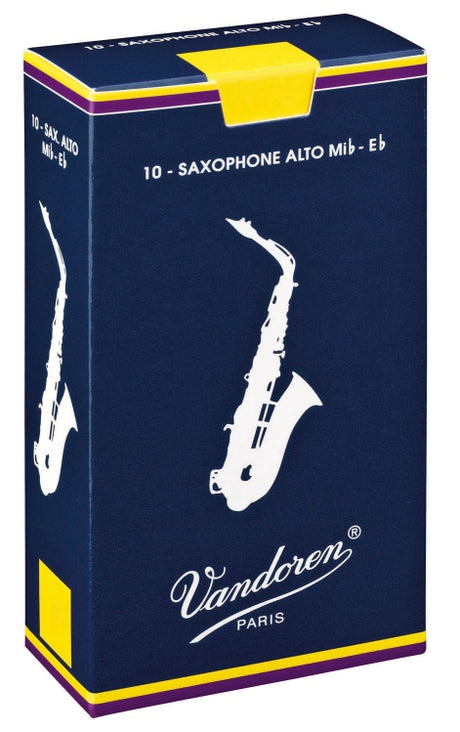
Vandoren Classic Alto Saxophone Reeds Pack of 10 Various Strengths
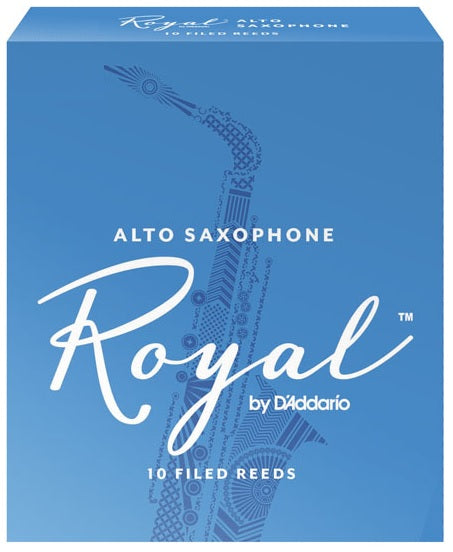
D'ADDARIO Woodwinds Royal Alto Saxophone Reeds Various Strengths 10-Pack
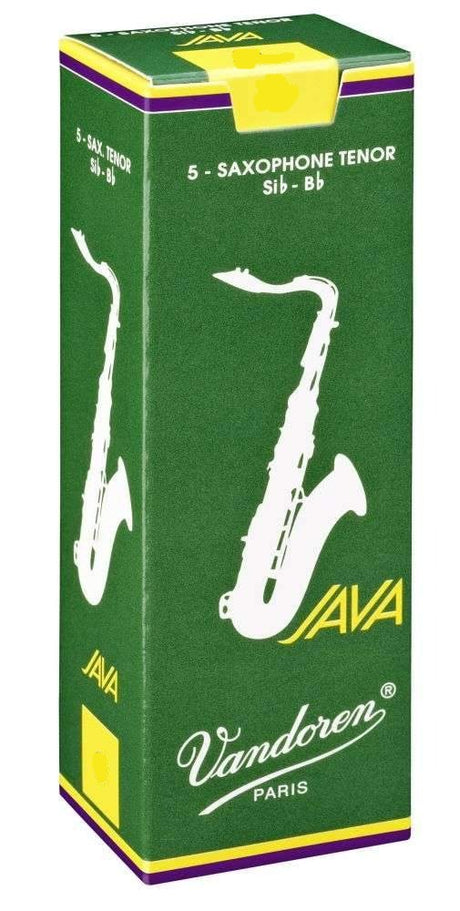
Vandoren Java Tenor Saxophone Reeds Various Strengths Pack of 5
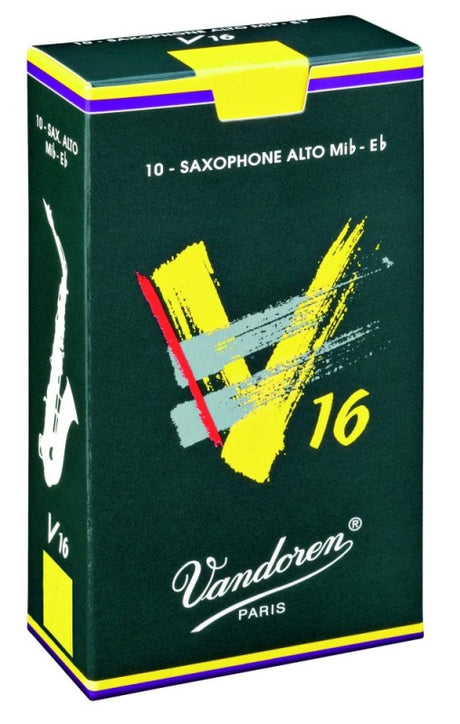
Vandoren V16 Alto Saxophone Reeds 10 Pack Various Strengths