A clean tone starts with good tuning, and good tuning starts with the right tool. Anyone learning a wind instrument soon asks which tuner for a wind instrument makes sense and how to tune with it in the first place.
This guide explains the three common types, why transposing instruments such as the B-flat trumpet and clarinet are a special case, and which device is enough to get started.
01The tuner types for wind players
Three types matter most for wind instruments. A chromatic tuner shows every semitone regardless of the note played, which makes it the versatile standard for all wind players. A clip tuner attaches to the instrument or music stand and reads the note through vibration rather than a microphone, which helps in noisy surroundings. A tuner and metronome combo links tuning with a pulse, so you can practise intonation and timing together.
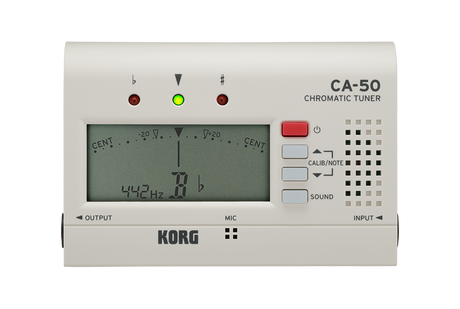
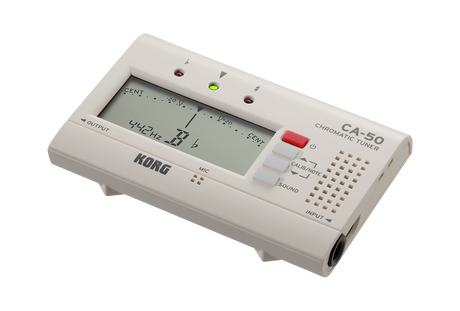
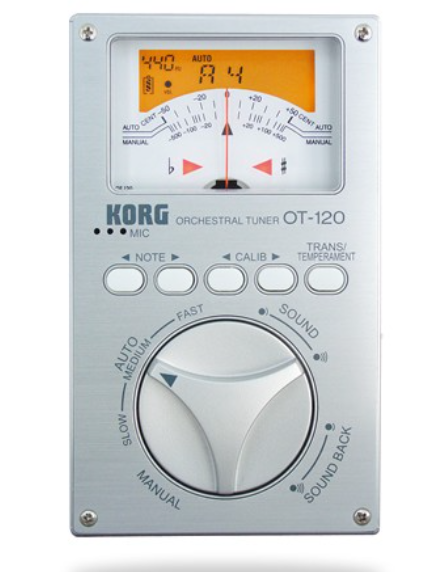
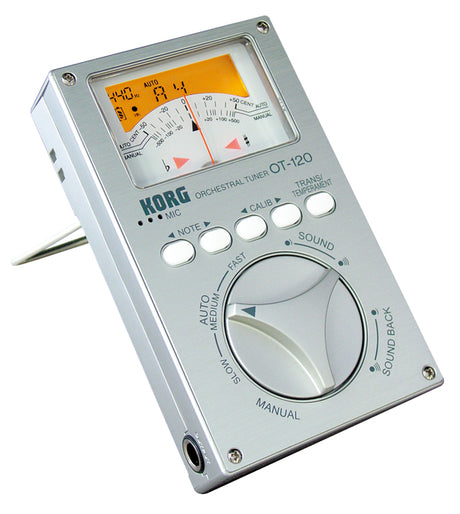
For a start, a sturdy chromatic tuner is the safest choice. The Korg CA-50 chromatisch Stimmgerät shows every note you play and fits in the sheet music bag. If you play in an ensemble or concert band and want a flexible reference pitch, the Korg OT-120 Stimmgerät calibrates to 440, 442 or 443 Hz.


02Transposing instruments: sounds different from the notation
Many wind instruments are transposing. The written note and the note you actually hear are not the same. A B-flat trumpet or B-flat clarinet plays a written C, but a B-flat sounds. An alto saxophone even sounds an E-flat lower than written.
For tuning this means: either you do the maths while reading, or you use a chromatic tuner and tune to the sounding concert pitch. A chromatic device simply shows the note that truly comes out of the instrument and saves you the mental arithmetic. That is exactly why it is the more practical choice for wind players than a guitar tuner, which only knows fixed string notes.
03Reference pitch and calibration: 440 or 442 Hz
The reference pitch is based on the concert A. In many orchestras and concert bands it sits at 442 Hz, slightly higher than the internationally common 440 Hz. What matters most is that everyone in the ensemble calibrates to the same value, otherwise it sounds off despite a correct reading.
Simple devices are often fixed at 440 Hz. A device with an adjustable reference pitch like the Korg OT-120 Stimmgerät has the edge here, because you can match it to the ensemble setting. For practice at home on your own, 440 Hz is usually enough.
| Type | Ideal for | Note |
|---|---|---|
| Chromatic | starting out, solo lessons | shows every note |
| Orchestra tuner | ensemble, concert band | reference pitch adjustable 440 to 443 Hz |
| Contact microphone | noisy room, rehearsal | reads vibration rather than room sound |
04How to tune, step by step
Warm up before tuning. A cold instrument sounds lower and drifts out of tune again as it warms, so a few minutes of playing belong before tuning.
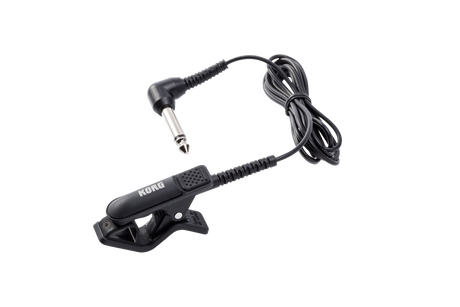
Then play the reference note, usually the written C2 on the trumpet, or the given tuning note on the clarinet. If the device reads sharp, make the instrument longer: pull out the main tuning slide on the trumpet, loosen the mouthpiece or barrel slightly on the clarinet. If it reads flat, do the opposite. In a noisy room a contact microphone like the Korg Kontaktmikrofon CM-300 picks up the vibration directly. If you are just starting out on the flute or another wind instrument, you will find the right instrument in our Querflöten.

For a start, a chromatic tuner that shows every note is enough. Once you move into an ensemble, an adjustable reference pitch becomes useful. More important than the most expensive device is the habit of tuning briefly before every practice.
Frequently asked questions
Which tuner is best for a wind instrument beginner?
Why does my tuner show a different note than the notation?
Should I tune to 440 or 442 Hz?
Do I need a clip tuner or is a normal one enough?
Do I need to warm up before tuning?
Find the right tuner
From the chromatic starter tuner to the orchestra tuner, the choice for every wind instrument.
Browse tunersKorg CA-50Passende Produkte