Finding the right violin for a child often comes down to a single question: which size fits? A violin does not come in one standard size, but ranges from the tiny 1/16 up to the full 4/4. Which violin size is right for your child depends above all on arm length — not on age alone.
In this guide we show why the right size matters so much, how to measure it yourself in two minutes, and roughly which size belongs to which age. The size chart below sums it all up at a glance.
01Why size is decisive
A violin that is too big is the most common reason children quickly give up practising. If the instrument is too long, the left arm has to be permanently overextended to reach first position. This leads to a tense posture, quick fatigue and poor intonation — frustration instead of joy.
The right size, on the other hand, allows a relaxed, slightly bent arm posture. The child reaches every note without stretching, can guide the bow with control and builds the correct technique from the very start. The temptation to buy one size up “to grow into it” almost always backfires on the violin: better one size smaller than one size too big.
02How to measure the right size
The most reliable method is arm length. Have your child stretch the left arm out horizontally to the side. Now measure the distance from the base of the neck at the shoulder to the middle of the palm. This figure in centimetres tells you, via the size chart, the right violin.
The second test works with the instrument itself: when the violin is placed at the neck, the child should be able to loosely wrap the hand around the scroll at the end of the neck without fully straightening the arm — the elbow stays slightly bent. Age is only a rough guide, because children grow at different rates. If the arm length falls exactly between two sizes, choose the smaller one.
03Popular sizes in the shop
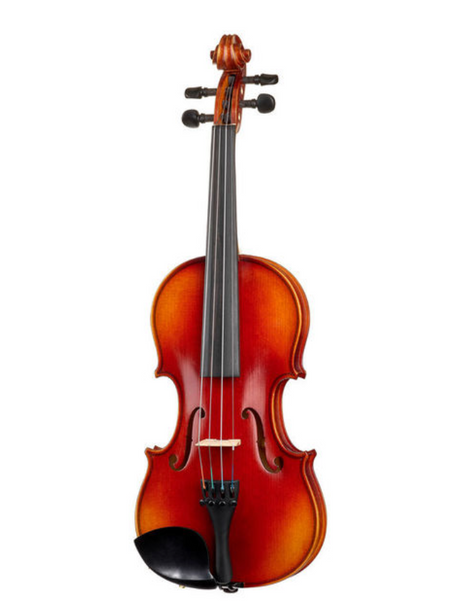
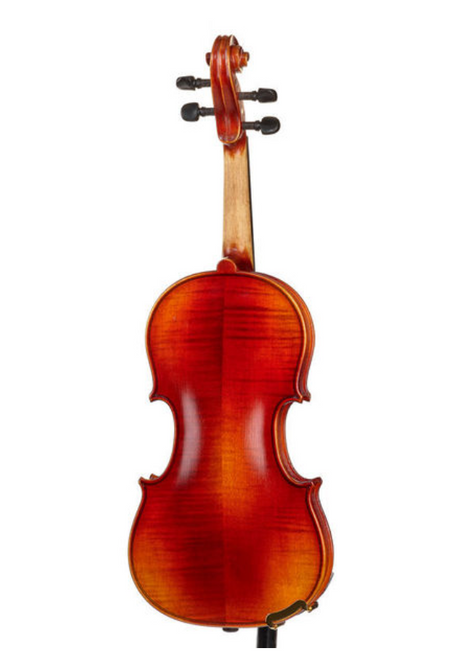
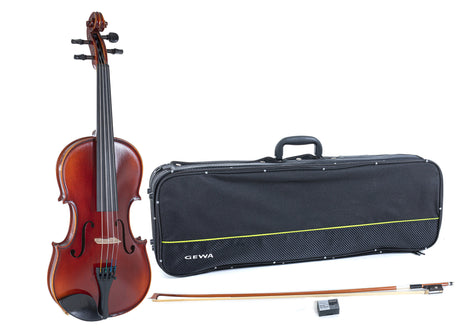
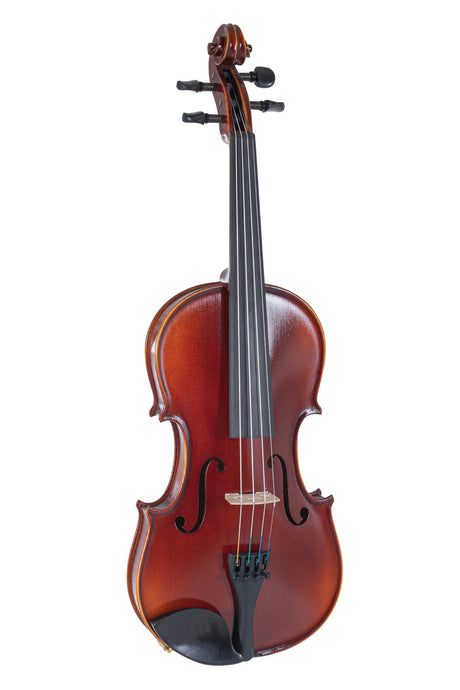
A good beginner set includes the violin, bow and case — ready to get started. So you can really compare sizes, we show the same series here in three sizes: the GEWA Violinset Ideale 1/2, the Gewa Violinset Ideale 3/4 and the GEWA Violinset Ideale 4/4. Same equipment, same price range — only the size grows with the child.
When your child outgrows a size, moving up to the next one within the same series is straightforward: the sound and handling stay familiar.


04Size chart
This chart maps each violin size to an approximate age and the matching arm length. Arm length is what counts — age only serves as a first guide.
| Size | Approximate age | Arm length |
|---|---|---|
| 1/16 | 3–5 years | approx. 35–38 cm |
| 1/8 | 5–7 years | approx. 40–43 cm |
| 1/4 | 6–8 years | approx. 43–47 cm |
| 1/2 | 7–10 years | approx. 47–51 cm |
| 3/4 | 9–12 years | approx. 51–55 cm |
| 4/4 | from approx. 11–12 years | from approx. 55 cm |
Measure the arm length first, compare it with the chart and, when in doubt, choose the smaller size. That way your child plays relaxed and with the correct posture right from the start.
Frequently asked questions
Which violin size fits which age?
Should I buy the violin one size larger so it lasts longer?
Which size do adults and teenagers need?
How do I measure arm length correctly?
Find the right violin
Browse our violin range or go straight to the size that fits your child.
View all violinsViolins in 3/4Passende Produkte