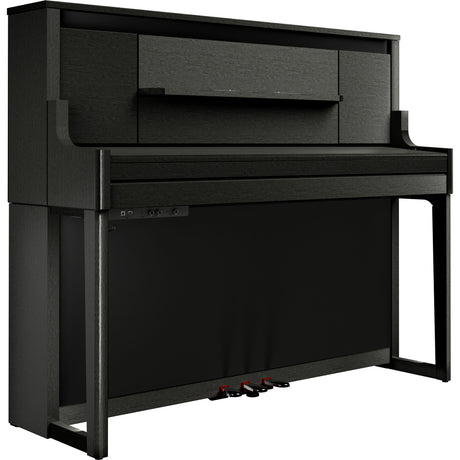
Anyone shopping for a good home digital piano keeps running into the same three names: Yamaha, Kawai and Roland. All three build mature premium instruments, yet they follow three different philosophies when it comes to key feel and sound. Which of the Yamaha, Kawai and Roland digital piano makers fits you depends less on price than on how you play and which sound character you are after.
This comparison explains the real differences between the three top home ranges, the Yamaha Clavinova CLP, the Kawai Concert Artist CA and the Roland LX, and places them by player type, deliberately without talking any brand down, because all three perform at a high level.
01The keyboard: three ways to recreate a piano feel
On a digital piano the keyboard is the most important difference, because it decides how close the playing feel comes to an acoustic piano.
Yamaha builds the Clavinova CLP around the GrandTouch action, with weighted keys and a pressure point that feels precise and controlled. Kawai fits the Concert Artist CA with a Grand Feel wooden keyboard, using long wooden key levers that come very close to a grand piano action and that many players find especially organic. Roland uses the PHA-50 hybrid keyboard in the LX range, combining wood and synthetic material to pair the authentic feel of wood with the durability of synthetics.
Players coming from classical acoustic lessons often value Kawai's wooden keyboard. Players who like a very defined, even keyboard feel at home with Yamaha quickly. Roland sits in between with its hybrid approach and is a safe choice when the instrument has to last many years and serve several players.
02The sound: sampling versus modeling
Sound is where the philosophies separate most clearly. Yamaha and Kawai work with sampling, using high quality recordings of real concert grands, while Roland takes a different path.
For the Clavinova, Yamaha records its own CFX concert grand and a Bösendorfer Imperial. The result is a bright, brilliant and very clearly drawn sound that projects well. Kawai samples the SK-EX concert grand from its own workshop, giving a warmer, rounder and more organic base character. In the LX range Roland largely does without finished recordings and instead generates the tone through PureAcoustic Modeling, a real time sound calculation. The advantage: the tone responds continuously to your playing and never sounds like a repeated sample, paired with powerful speaker systems that fill the room well.
In short: Yamaha sounds bright and present, Kawai warm and organic, Roland lively and very responsive.
| Feature | Yamaha Clavinova CLP | Kawai Concert Artist CA | Roland LX |
|---|---|---|---|
| Keyboard | GrandTouch, weighted | Grand Feel, real wood | PHA-50 hybrid (wood and synthetic) |
| Sound generation | sampling (CFX and Bösendorfer) | sampling (SK-EX) | PureAcoustic Modeling, no sample |
| Sound character | bright, brilliant, clear | warm, round, organic | lively, very responsive |
| Strength | precision and projection | acoustic playing feel | tonal dynamics and powerful speakers |
| Best for | controlled, brilliant players | classical from piano lessons | versatile, long lasting setups |
03Which maker suits which player type?
Keyboard and sound together give a fairly clear assignment.
The Yamaha Clavinova CLP suits players who value a bright, clear sound and a very defined keyboard, from the CLP-835 as an entry into the range up to the CLP-885 flagship. The Kawai Concert Artist CA is the recommendation for anyone coming from classical piano lessons who wants a genuine wooden feel, for example with the CA-701 or the top model CA-901. The Roland LX is the right choice when a lively, modeled sound, many tone colors and powerful speakers matter, from the compact LX-6 to the LX-9 flagship.
For a first impression of the full range, take a look at our selection of Digitalpianos, where the series of all three makers stand side by side.


Yamaha, Kawai and Roland build three very good digital pianos that differ not in level but in character. Bright and precise, warm and organic, or lively and modeled, that is the real decision. Listen to the sound and pay attention to the key feel, and you will quickly find your maker.
Frequently asked questions
Which digital piano maker is best, Yamaha, Kawai or Roland?
What is the difference between sampling and modeling?
Which keyboard comes closest to a real piano?
Which model is a good entry into the premium class?
Find the digital piano that fits you
Compare the premium ranges from Yamaha, Kawai and Roland at your own pace and find the instrument that suits your playing.
See all digital pianosExplore the Roland LX-9Passende Produkte