Which piano fits a room where several students of different ages and skill levels practise every day? For an instrument destined for a music school teaching room or a club's practice room, different criteria apply than for a private purchase for the living room: the strain is far higher, the action is struck with very different force by changing hands, and the tuning has to stay stable even with heavy foot traffic.
This guide sets out what institutional buyers – music schools, schools with a music focus, municipalities and associations – should weigh when choosing: action construction, tuning stability under a changing room climate, and a build that stays low-maintenance even under heavy daily use.
01An action built for heavy daily use
A piano in a teaching room is played differently than at home: several users a day, very different touch strengths, and often inexperienced hands. The action has to absorb this strain evenly over years, without the touch or repetition noticeably changing.
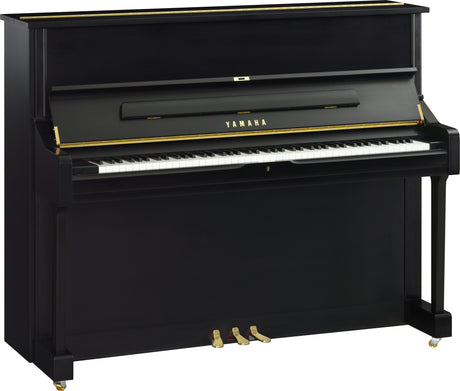
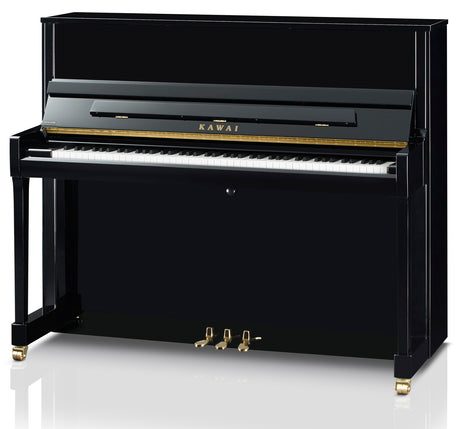
Professional upright actions built with consistently high-quality materials – solid wood hammers, stable centre pins, precisely made repetition parts – are designed for exactly this. The Yamaha U1 Q Klavier schwarz poliert has been considered a standard instrument in music schools and conservatories worldwide for decades, because its action is built for this kind of heavy daily use. The Kawai K-300 Klavier schwarz poliert pursues the same goal with its own similarly robust action design and is likewise a common choice for practice rooms and music schools.


02Tuning stability in the teaching room
A teaching room often has a different climate profile than a living room: more foot traffic, heating cycles that vary between lessons, and sometimes irregular ventilation. These fluctuations affect the strings and tuning pin block and cause a less stably built piano to go out of tune faster.
Robust models with solid, well-seasoned soundboards and stable cast-iron frames react more slowly to short-term climate changes and hold their tuning longer. For a teaching room, an instrument built for professional heavy daily use is therefore worth choosing over an entry-level model meant for occasional private use.
03Low-maintenance construction and a solid entry point for a new purchase
Not every institution needs the largest model in the range right away, but a low-maintenance, solidly built piano pays off over its service life. The Yamaha B30 Klavier schwarz poliert is the current generation of the Yamaha entry-level series and brings a mature, robust action in a more compact build, an option worth considering when equipping a second or third practice room.
Our Klaviere - Neu category gives an overview of currently available new models for institutions.

04Which model fits which use
The three models differ less in principle than in the maturity of their action and their typical placement. For the main teaching room with daily heavy use, the more mature build is worth the choice; for a second room, the more compact entry-level generation can be enough.
| Model | Action generation | Typical use | Distinctive feature |
|---|---|---|---|
| Yamaha B30 | current entry-level generation | second/third practice room | compact, robust new-generation build |
| Kawai K-300 | standard upright action | main teaching room, heavy daily use | stable cast-iron frame, mature line |
| Yamaha U1 | professional upright action | music school, conservatory, heavy daily use | widely used training instrument worldwide |
For a music school teaching room, what matters most is an action that withstands heavy daily use, a build that keeps the tuning stable under a changing room climate, and a low-maintenance construction that lowers the effort over the service life. If you are torn between models, start from the intended placement and the daily intensity of use.
Frequently asked questions
Why does not every piano suit music school use
How often does a heavily used piano need tuning
What does low-maintenance action actually mean
Digital piano instead of an acoustic piano for the teaching room
What to watch for when placing a piano in a classroom
Find the right piano for your teaching room
From the robust entry-level generation to the standard model for heavy daily use, an overview of the current new models.
Browse new pianosDiscover the Kawai K-300Passende Produkte